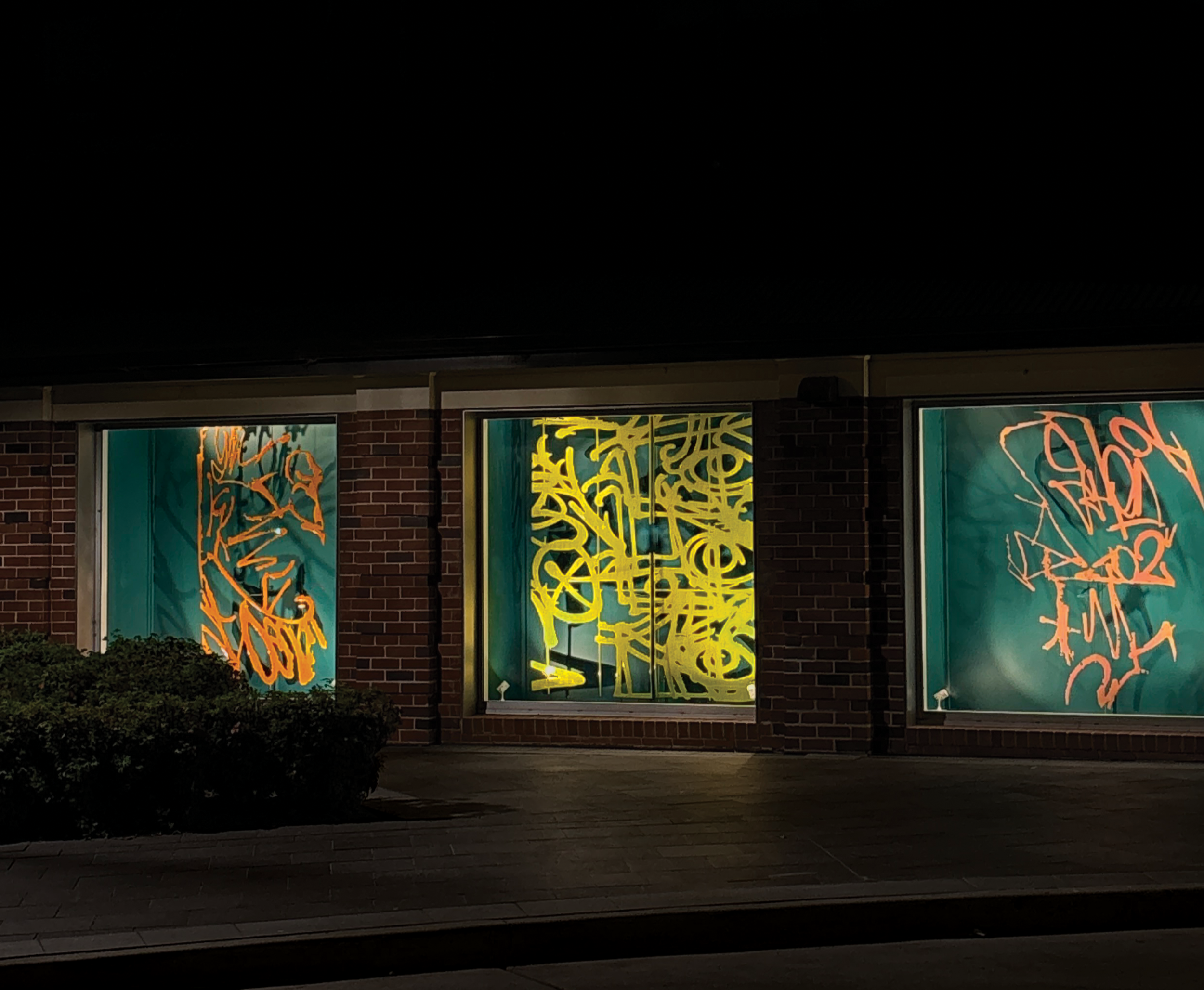
Backjump
Exhibited on Dharug Country at Bankstown Arts Centre, New South Wales
17 April - 30 May 2026
-
backjump: notation, disnotation
In his final work recalling 2 years spent as brother to Palestine’s fedayeen, Jean Genet recalls the postulate of a Sudanese revolutionary with whom he is mutually enamoured:
“When you were strong enough to land in our country you were still only the equivalent of a linguistic game of patience… But to conquer us you needed a common language.”
It is the memory of a conversation captured, perhaps unfaithfully, that is clarifying in its prescience: in order to unsettle a people with genocide, a language had to be settled into common use. Such games of political manipulation are no less familiar to us in their design: empty systems of discourse by the new archons of world-making, the West’s political and media class, are easily recognisable in their illegibility: a common parlance emptied of relation to the world, to accountability, authenticity, to justice and its attendant peace.
If Genet’s friend’s theorem has survived as the l’esprit d’escalier of a 40-year history of public language made hyper-visible and grotesque, Madden’s Backjump turns attention to its fugitive counterpart; an alternate language hidden in plain sight.
Madden’s work as amanuensis and translator of the illegal and covert is extended in this solo exhibition that reads graffiti as notation. In her new works exhibited in the window gallery, the surface becomes text. Graffiti on brick and concrete are remade into a synthetic orthography that recognises surface as author, as interlocutor in mimetic exchange. Far from a notation that denies relation to its spatial and temporal context, these forms cannot (and do not want to) escape accountability to their environments. To what is visible in plain sight.
In Misreading Misreading, text and form authored in the spirit of the moment is remade into a permanent language that invites a kind of first contact with the already-known. The incidental and aleatoric become beseeching in their permanence, demanding to be read with the legitimacy of ‘real language’.
In conversation with Tia, I’m enamoured of her attention to the brief and almost-accidental, the time it takes paint to hit a wall. In her poetic insistence on reading form as occasioning translation, she becomes an artist of a language which both denies and demands interpretation. Here, the esprit d’escalier, the spirit of a moment, entreats you–unsettles, disrupts–briefly immortalised. Then, disappears.
To get to Bankstown Arts Centre, you must walk past, or encounter through line of sight, the neighbouring trainline. Trains pass by at frequent intervals in a blur of windows, doors and faces, and every so often, you might also glimpse a sprawling line of graffiti. Street writers call this a backjump: a piece painted quickly on the side of a train when parked briefly in traffic or at a terminal, before it proceeds en route to ferry commuters across the metropolis. Of course, backjumps are made with the knowledge they’ll likely be washed off by the day or week’s end, and so these markings are not intended to last, nor, necessarily, should they be read or understood. A backjump, and graffiti more broadly, is simply made to be witnessed.
This exhibition brings together new and existing works as a kind of archive. Illegible graffitied forms collected from sites overseas and across Sydney’s western suburbs are arranged along shelves that mimic a typesetter’s composing stick. In the window galleries—half inside, half outside—three large-scale sculptural works draw from this found graffiti, but also from the surfaces it was written on: lines of mortar between bricks; cyclone-wire fencing; the stem of a climbing plant; a poster pasted over and torn back to reveal what lies beneath. These marks, made by the city’s own infrastructure, co-author a street writer’s inscrutable scrawl.
City walls have long functioned as spaces for voices not otherwise permitted to speak, and so graffiti presides as a voice for the voiceless: sanctioned or unsanctioned, language or non-language. The works in Backjump were initially created as a way of asking what is said by things that resist readability, and yet graffiti, precisely because of its unwieldy illegibility, may be the most comprehensible mark of all; because what it says, even when it says nothing at all, is ‘in this city, I exist somewhere.’
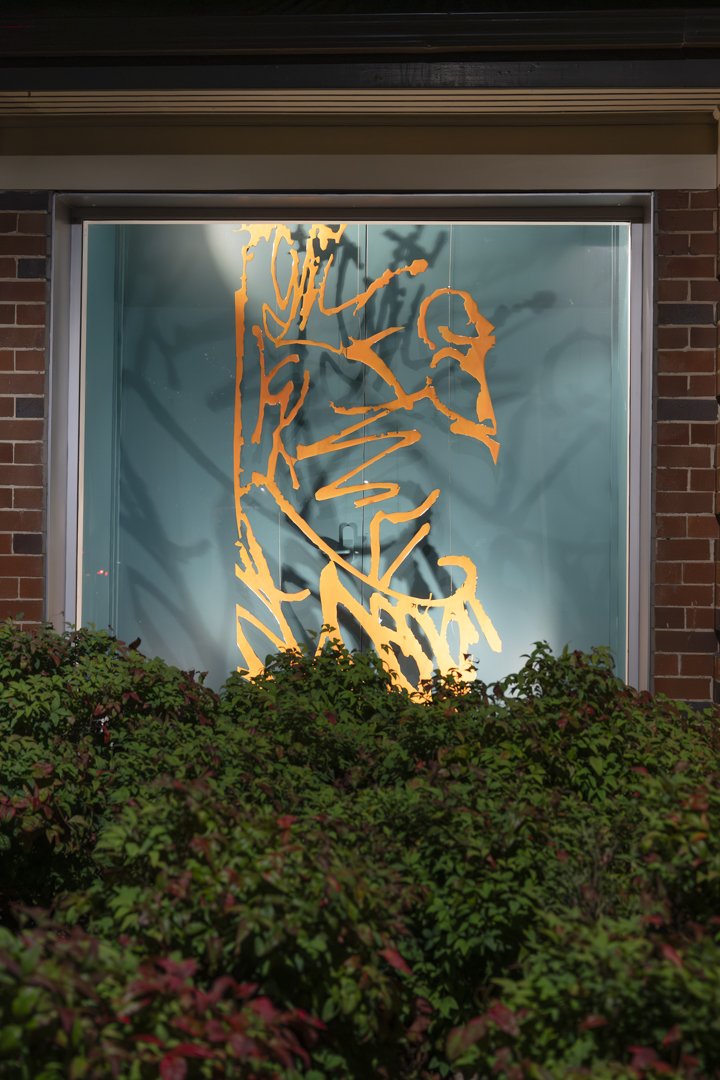
Tia Madden, 'Bite,' 2026. Plywood, expoxy, pigment; 210 x 120cm. Photographer: Richard Trang
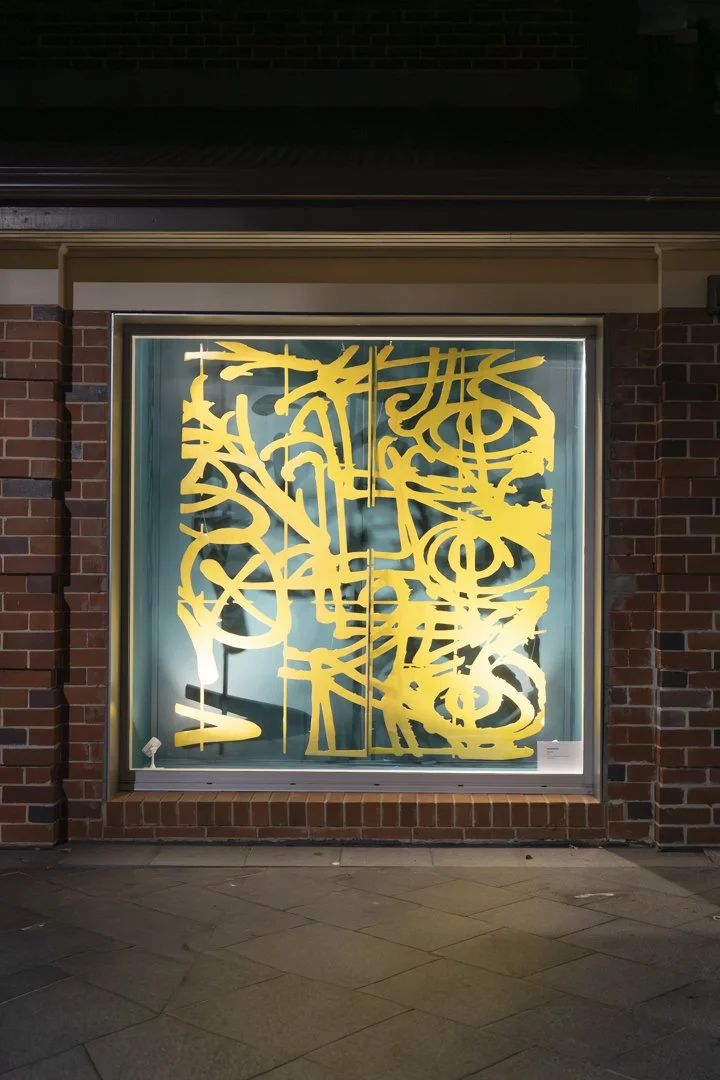
Tia Madden, 'Burner,' 2026. Plywood, expoxy, pigment; 210 x 210cm. Photographer: Richard Trang
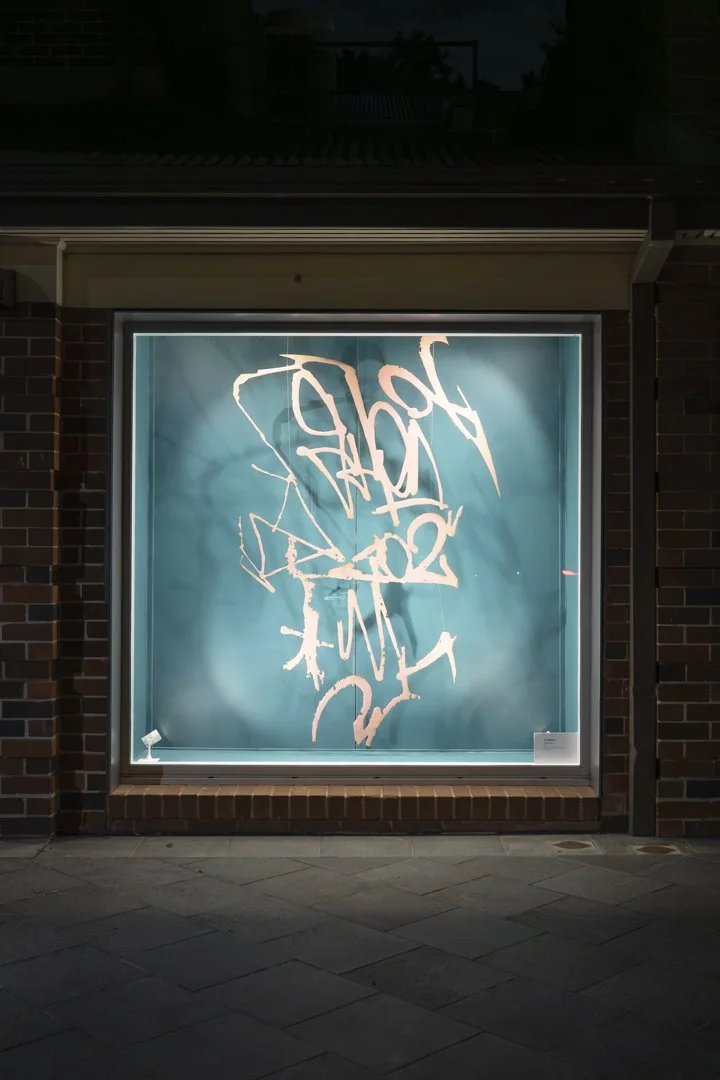
Tia Madden, 'Trackside,' 2026. Plywood, expoxy, pigment; 210 x 120cm. Photographer: Richard Trang
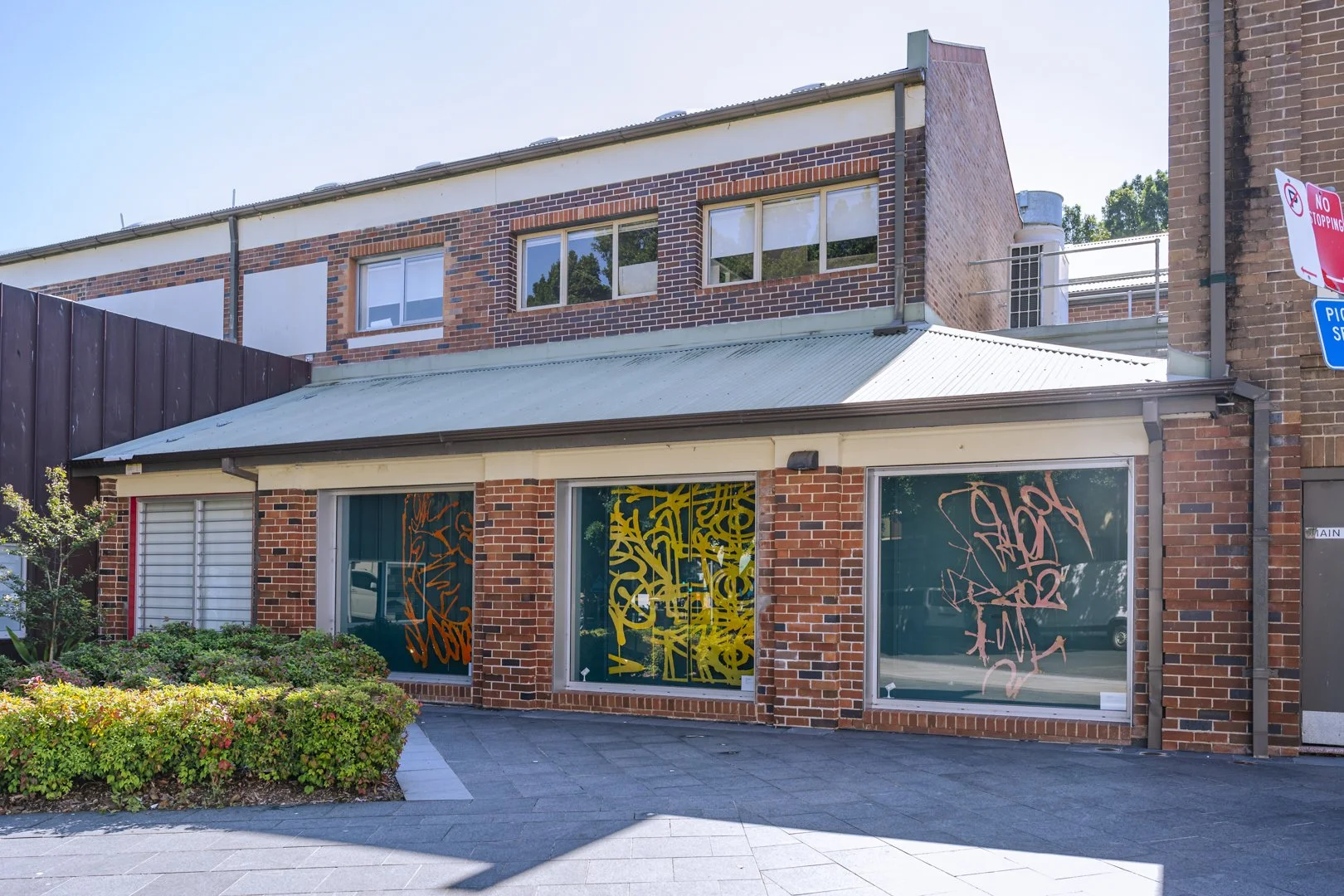
Tia Madden, 'Backjump' 2026, installation view at Bankstown Arts Centre. Photography: Richard Trang
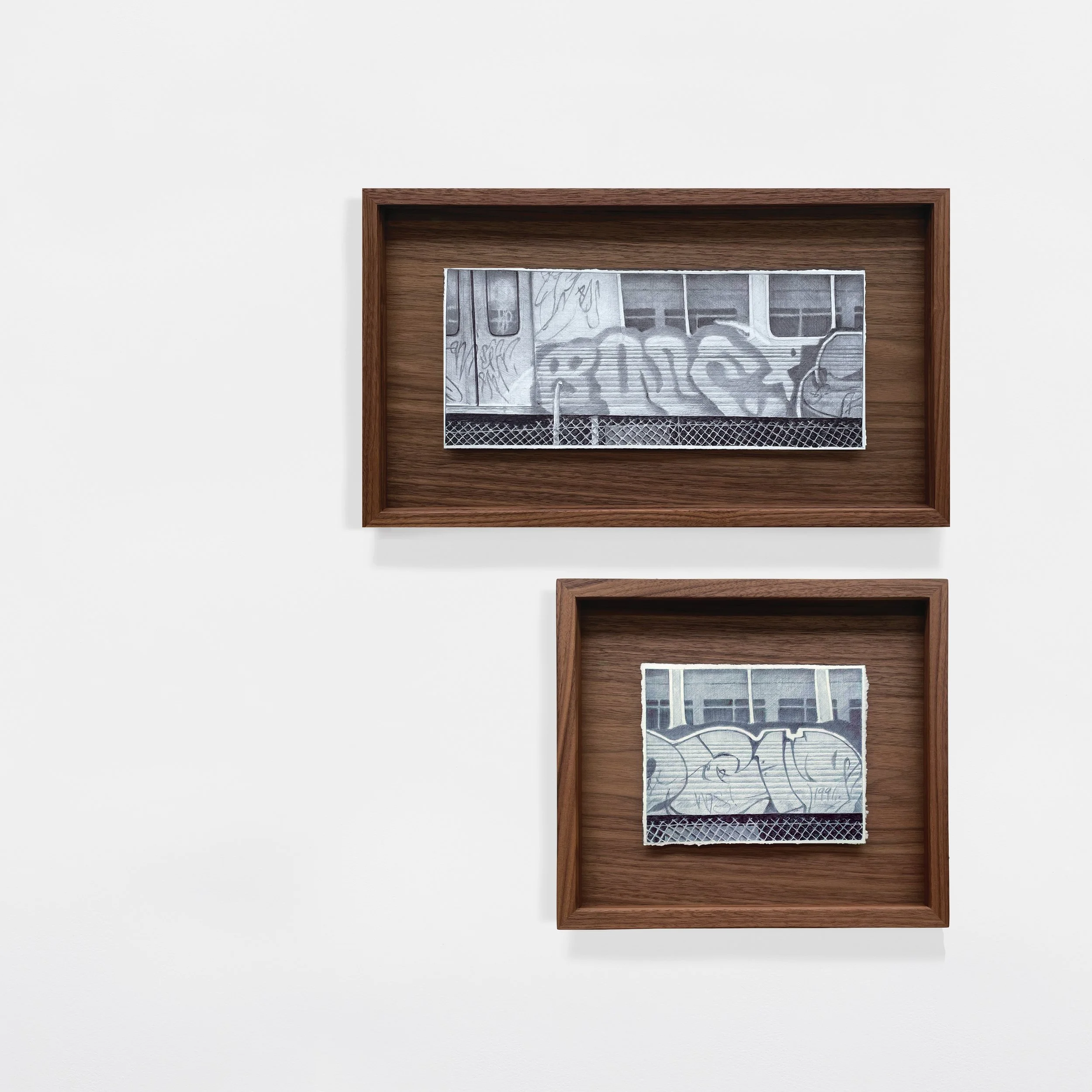
Tia Madden, 'Parade (Backjump 1991)', 2026, ballpoint pen on paper.
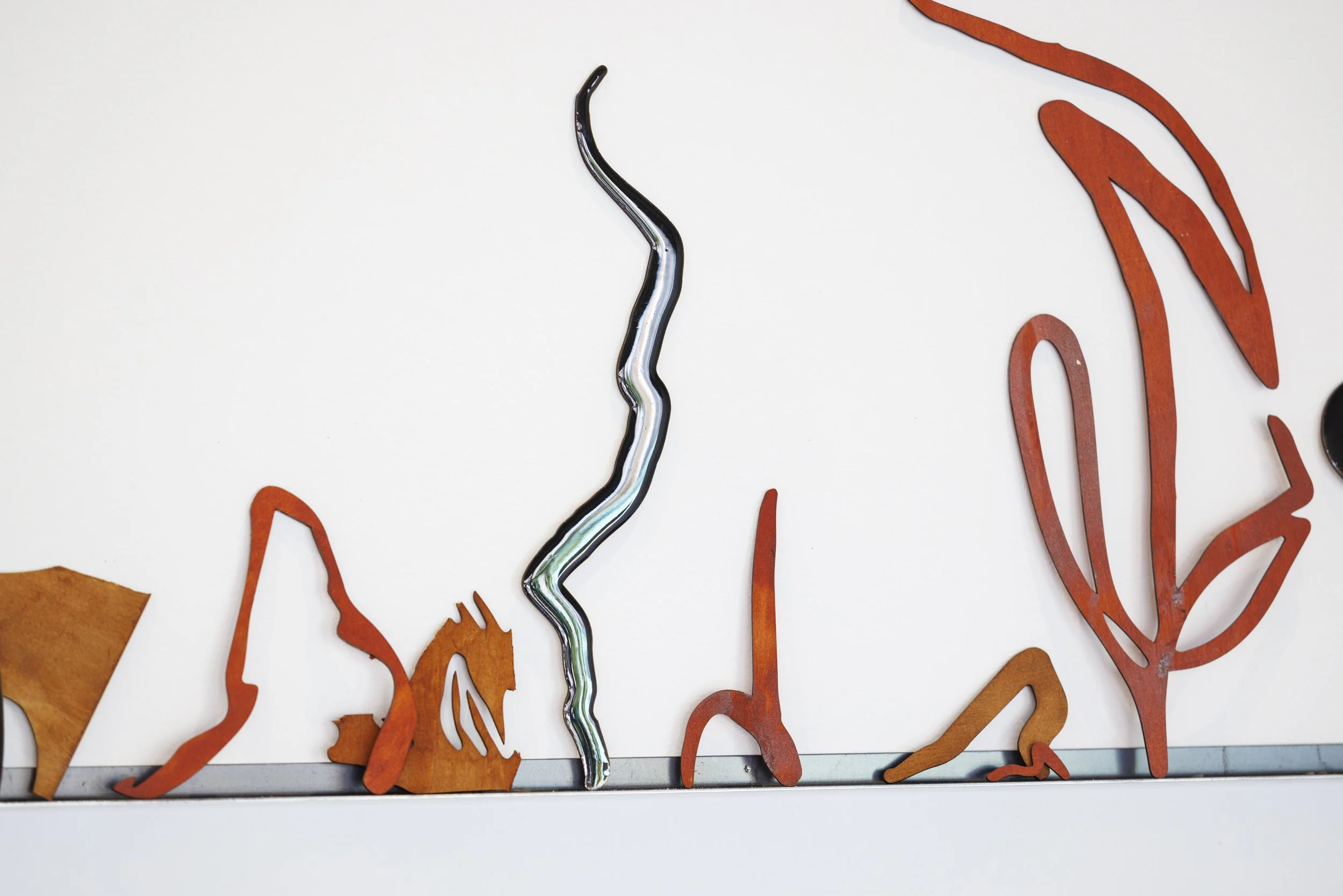
Tia Madden, 'Misreading Misreading,' 2025-2026. Plywood, epoxy, pigment, wood stain, steel shelf. Dimensions variable. Photography: Rosina Possingham
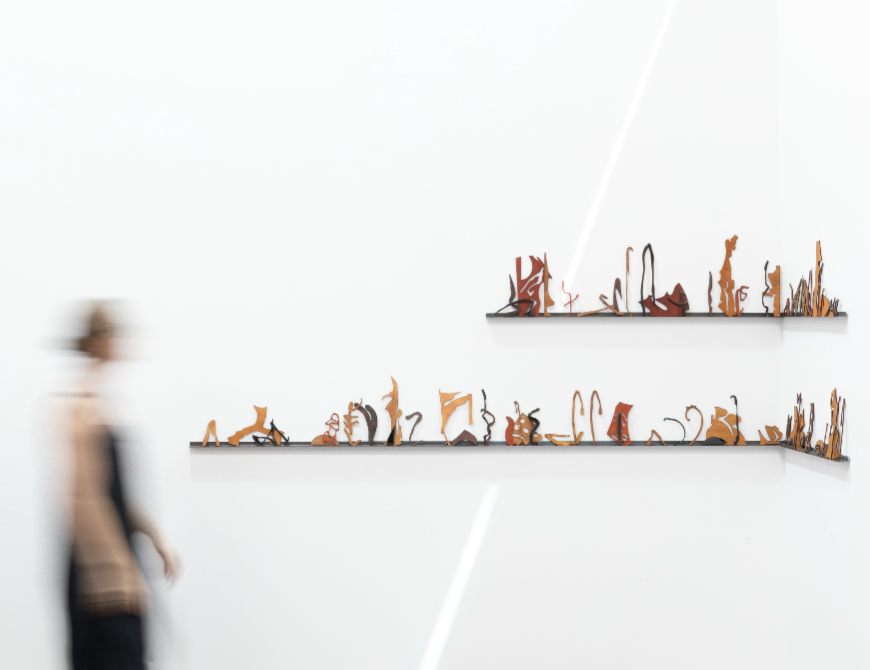
Tia Madden, 'Misreading Misreading,' 2025-2026. Plywood, epoxy, pigment, wood stain, steel shelf. Dimensions variable. Photography: Jessica Maurer
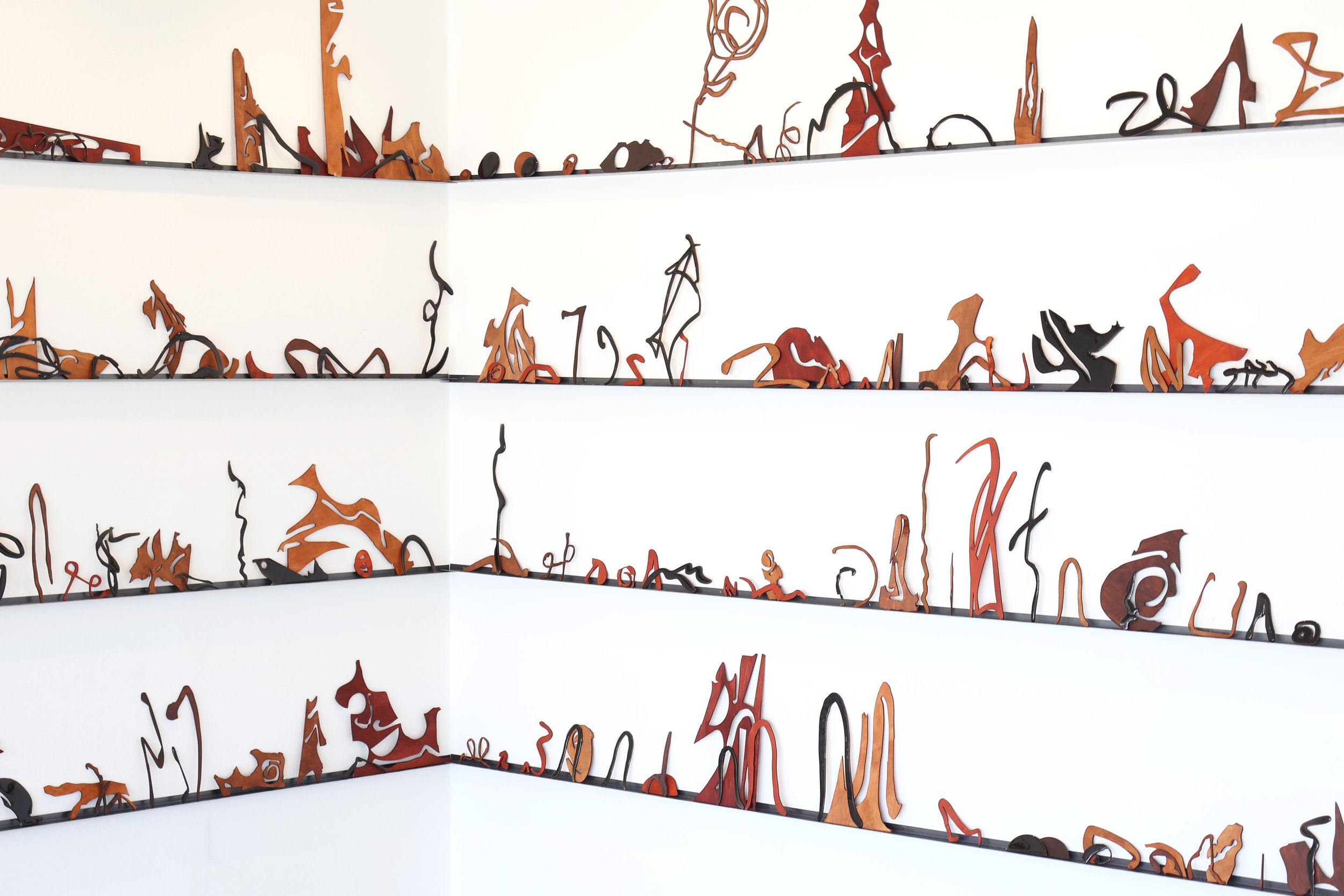
Tia Madden, 'Misreading Misreading,' 2025-2026. Plywood, epoxy, pigment, wood stain, steel shelf. Dimensions variable. Image courtesy of the artist
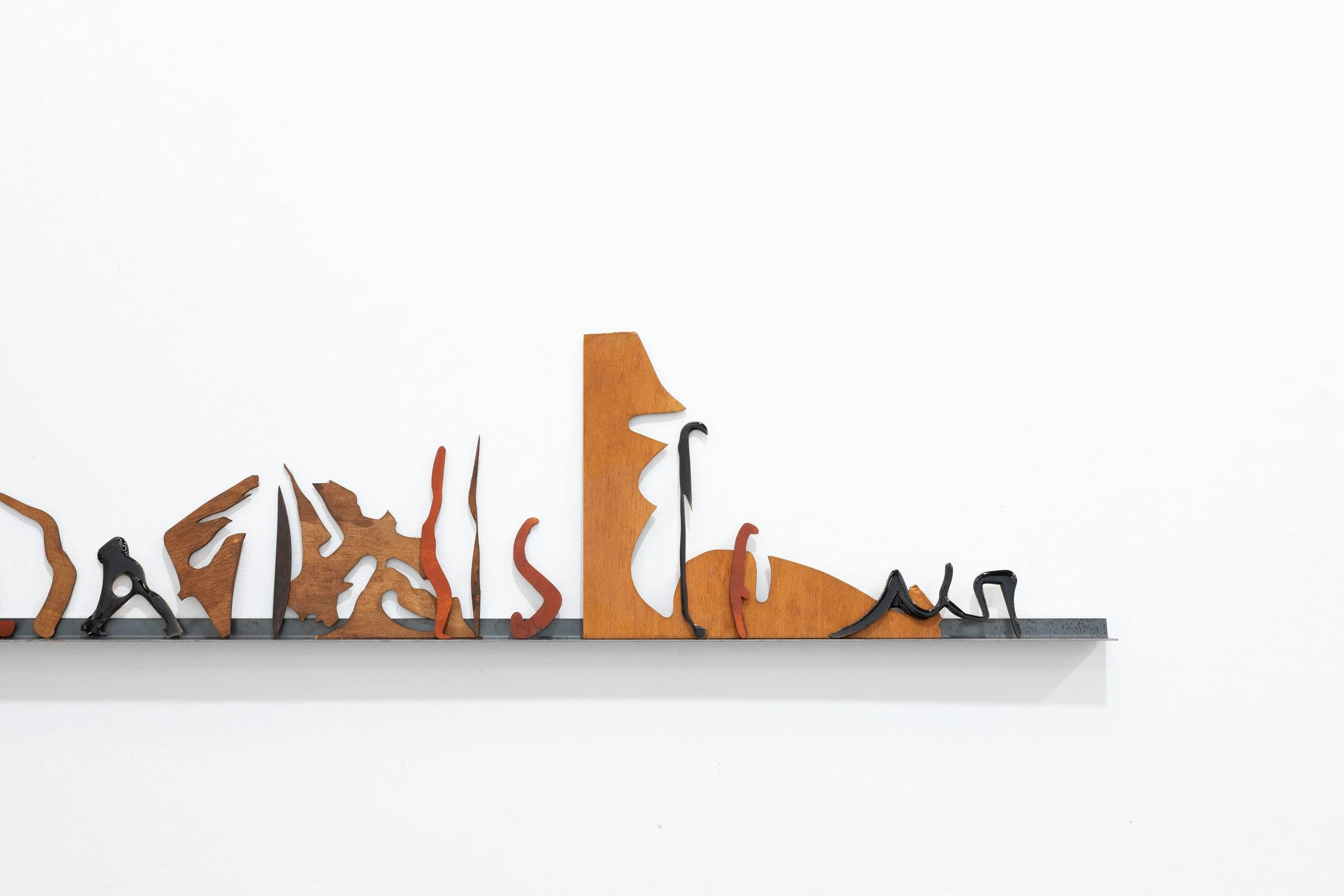
Tia Madden, 'Misreading Misreading,' 2025-2026. Plywood, epoxy, pigment, wood stain, steel shelf. Dimensions variable. Photography: Jessica Maurer
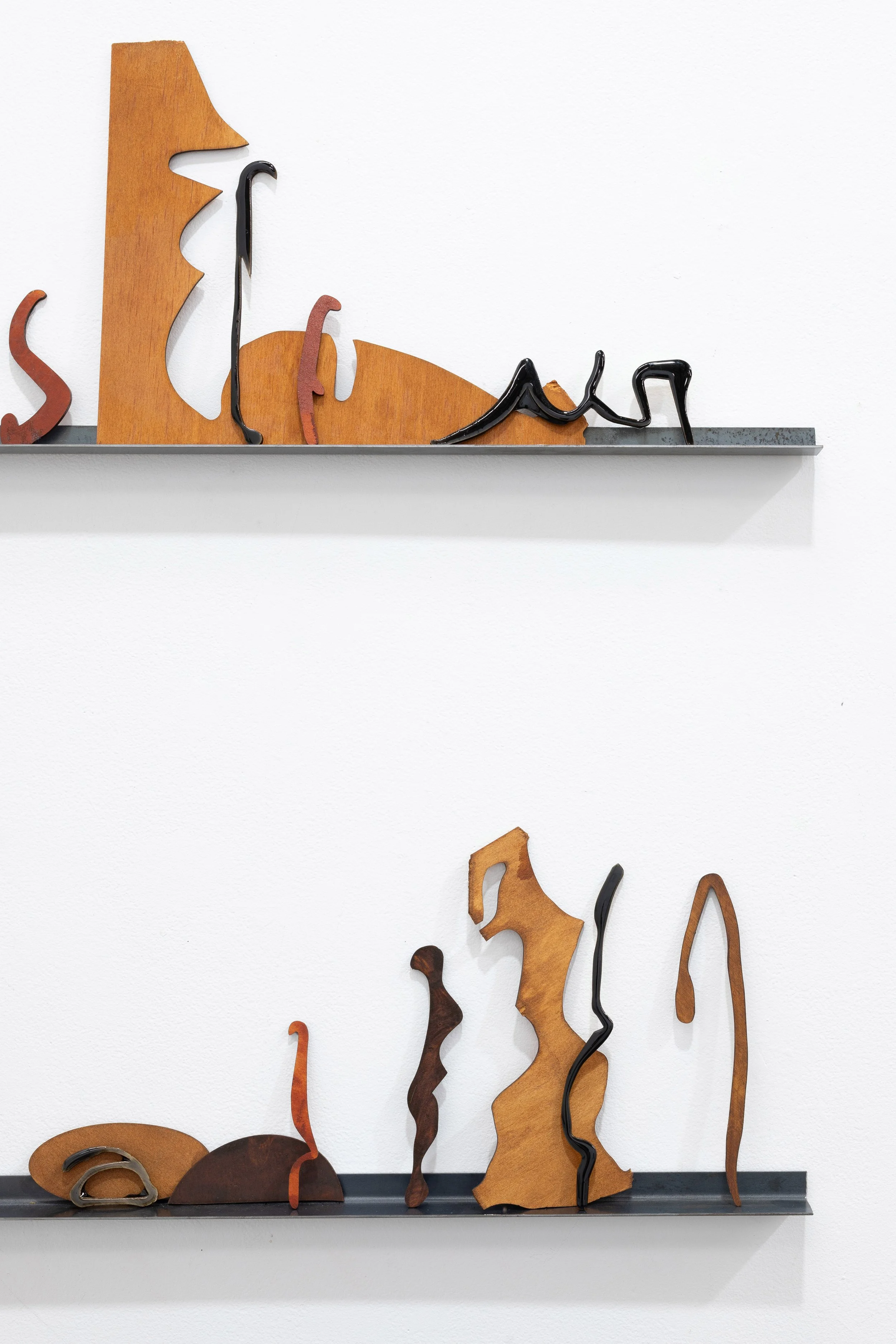
Tia Madden, 'Misreading Misreading,' 2025-2026. Plywood, epoxy, pigment, wood stain, steel shelf. Dimensions variable. Photography: Jessica Maurer
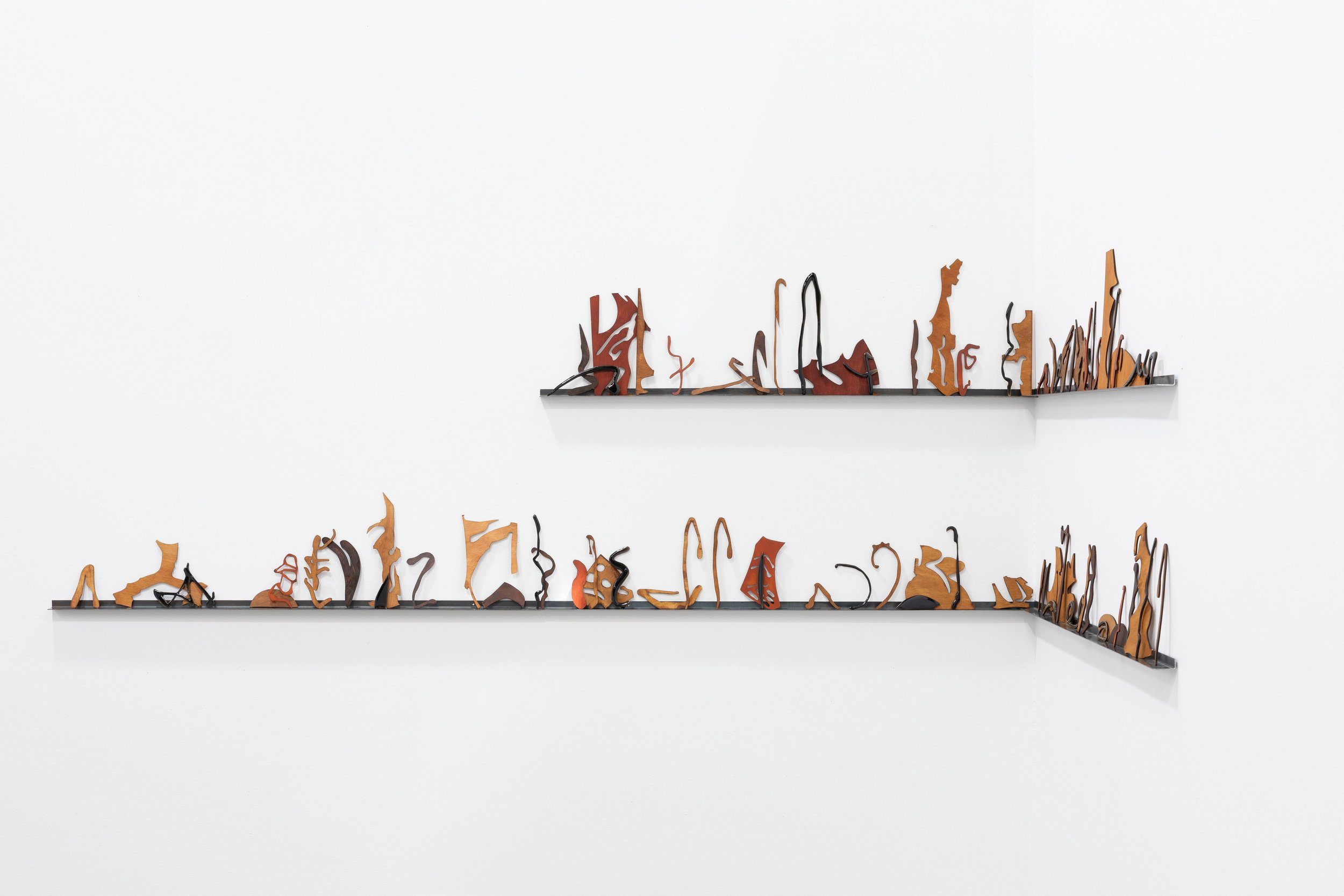
Tia Madden, 'Misreading Misreading,' 2025-2026. Plywood, epoxy, pigment, wood stain, steel shelf. Dimensions variable. Photography: Jessica Maurer
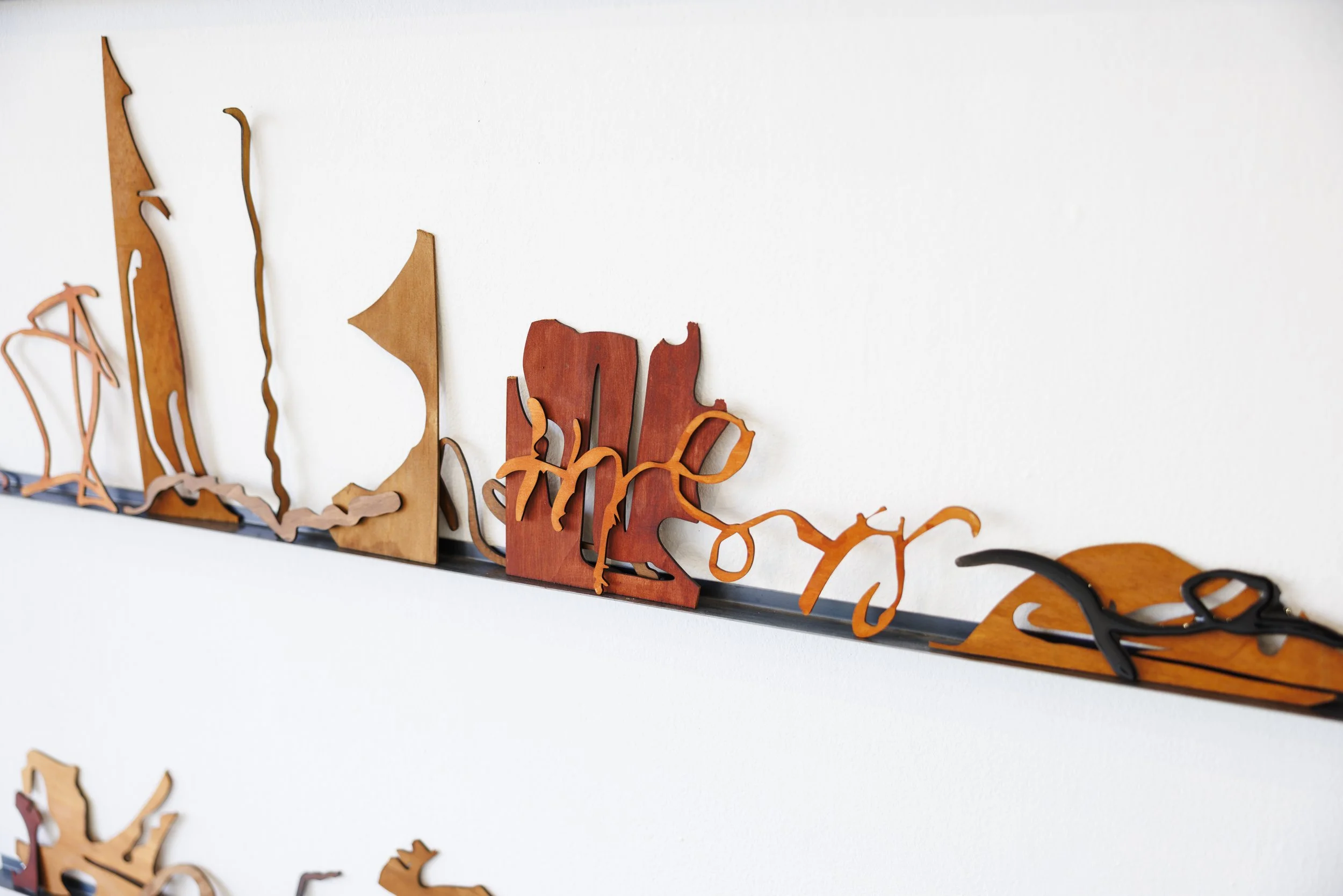
Tia Madden, 'Misreading Misreading,' 2025-2026. Plywood, epoxy, pigment, wood stain, steel shelf. Dimensions variable. Photography: Rosina Possingham